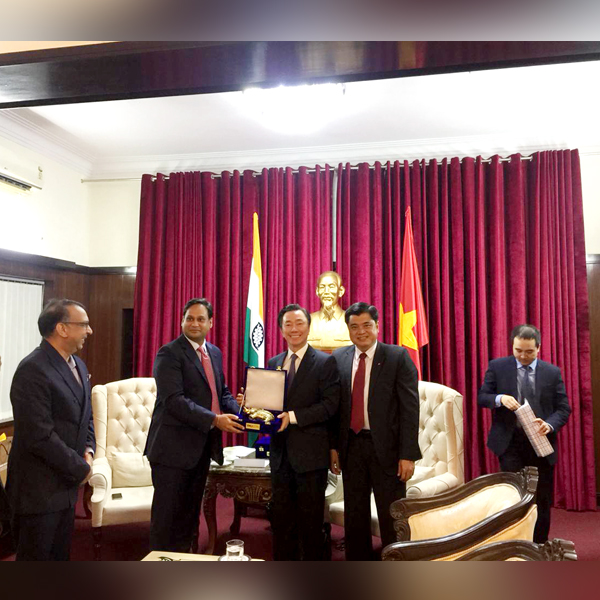
Vietnam in recent years has seen high economic growth and expansion of trade and investment, which has resulted in the country moving out of the category of Least Developed Country (LDC) and become part of new lower middle income country (MIC). It has also seen sharp truncation in poverty levels, which has resulted in bolstering the growth of GDP, currently estimated at USD 200.8 billion. India always had good relations with Vietnam which have strengthened in recently years to due to several factors. A joint sub commission of trade took place in Vietnam in 2018 where both countries discussed the ways and means to reduce trade barriers in implementation of the Framework Agreement on Comprehensive Economic Cooperation between India and ASEAN. With an aim to boost the bilateral trade between the two countries further, a high level Vietnamese delegation headed by a senior Minister of the Government visited India and as part of their official fixtures, met a TPCI delegation in the Vietnamese embassy in New Delhi. On the sidelines of the meeting, Publicity Division of TPCI got an opportunity to meet the new Vietnamese Ambassador to India Mr. Pham Sanh Chau and discussed various issues like present relations, trade and future prospects. Excerpts from the interview with Mr. Pham Sanh Chau, Ambassador of Vietnam to India: Q. How do you see India-Vietnam ties amid the changing geopolitical situation in the Indo-Pacific? Pham Sanh Chau: India-Vietnam strategic partnership is the key to maintaining peace and stability not only in SE Asia but in the entire Indo-Pacific region, as the two countries share plethora of complementarities. Bilateral trade has increased rapidly since the liberalization of the economies of both Vietnam and India but the two countries have had good diplomatic relations since 1972. In 1975 India granted the “Most Favoured Nation” status to Vietnam. Both countries signed a bilateral trade agreement in 1978 and the Bilateral Investment Promotion and Protection Agreement (BIPPA) in 1997. In 2003, both nations promulgated a Joint Declaration on Comprehensive Cooperation which was followed by Framework Agreement on Comprehensive Economic Cooperation between India and ASEAN, which further brought the two countries together. Q. What are your future plans, now that you have come to head the embassy in India? Pham Sanh Chau: I plan to make Vietnamese embassy a centre of activities. I am a good seller of my country and I will work to push trade with India in a very aggressive manner. Q. Can you elaborate how trade prospects can further be developed between the two countries? Pham Sanh Chau: Focus has to be on food and agri products. Your mango, pomegranate and oranges are complemented by Vietnamese Dragon fruit and Longan fruit. Unfortunately, your country levies 50% tariff on such exotic fruits like Dragon fruit and Longan fruit. Rs. 500 tariff is levied on every kilo of pepper coming to India. Vietnam exports $2.2 billion worth of pepper to the world but only $36 million worth of pepper comes to India. This high tariff is detrimental to end consumers in India as it makes the products expensive. It is also not consistent with WTO norms. On one hand we are talking of Comprehensive Economic Cooperation and on other hand we have such high tariffs. Likewise, tariff on Vietnamese coffee is 50% and on processed cashew nuts it is 30%. This need to be sorted out! Q. What role can TPCI play in enhancing bilateral trade between two countries? Pham Sanh Chau: It is good to know upon coming to India that TPCI is promoting food and beverage trade with India in an aggressive manner. Indusfood is a good platform to take our business relations to new heights. We import meat in large quantities from India. Fish and shrimp too are being imported. Your mango and pomegranates too have good prospect in Vietnam. On other hand, we would like to send Vietnamese Dragon Fruit, Longan Fruit, coffee and cashew nuts to India. We have invested heavily on developing SEZs in Vietnam which can get into tie-up with Indian companies. If you have any requirement for any fruit or commodity, let us know. Our farmers are very gifted, if you need anything, we can produce and export.

Why PM’s visit to Japan is crucial: Exploring food value chains and agricultural trade
As global population is expected to reach 9 billion by 2050, food needs would require a doubling of agricultural production. The need of the hour is to meet the rising demand, increase productivity, lower costs, use fewer resources such as energy, water and pesticides, and improve product quality and availability. Several companies in agri-tech and food processing technology businesses are today offering technological solutions for meeting industry demands and to provide solutions that the world is faced with. Current visit of India’s PM to Japan is strongly banking on food processing and food value chains sector which is going to bolster both the economy on mutual basis. As India is an emerging economy and a net food exporting country as well, it is indispensable for India to generate value addition as much as possible so as to escalate its exports. India’s food ecosystem offers huge opportunities for investments with stimulating growth in the food retail sector, favorable economic policies and attractive fiscal incentives. The Government of India through the Ministry of Food Processing Industries (MoFPI) is also taking all necessary steps to boost investments in the food processing industry. The government has sanctioned 42 Mega Food Parks (MFPs) to be set up in the country under the Mega Food Park Scheme. Currently, 12 Mega Food Parks have become functional. Food processing has an important role to play in linking Indian farmers to consumers in the domestic and international markets. The Ministry of Food Processing Industries (MoFPI) is making all efforts to encourage investments across the value chain. The industry engages approximately 1.77 mn people in around 38.6 thousand registered units with fixed capital of $29.7 bn and aggregate output of around $144.6 bn. Major industries constituting the food processing industry are grains, sugar, edible oils, beverages and dairy products. Food processing industry in India has two major sub-segments namely food and grocery retail (92%) and the foodservice market (8%). Major food categories such as dry food grocery, dairy products, fresh produce, perishables, and spices have a share of 34.7%, 16%, 15.6%, 8% and 6% respectively in the food processing industry. On the other hand, Japan is a saturated market. Its food processing sector does 60 per cent of its business outside Japan. But only 11 per cent of this is with India. There are only 12 Japanese companies operating in India. Japanese companies are flush with funds and are looking at investing in India. The Japanese are not looking at India as just a large market but also as a manufacturing hub. India is looking to be a sourcing destination for seafood, cashew, sesame and Darjeeling tea. It is also keen on exploring the feasibility of mergers and acquisitions of Indian companies in the food and agriculture value chain, and importing Japanese technology. Japan’s reliance on food imports is a further factor of concern, currently estimated at 60%, prompting recent government targets for boosting domestic production to 55% by 2050. Agricultural production at present is valued at around 1 trillion yen of which the government aims to increase it to 10 trillion yen by 2020, raising food self-sufficiency as a major agricultural policy. Japan can build on the benefits that it receives from the rest of the world in the form of enhanced food security by sharing its capabilities in areas where Japan plays a leading role on the world stage, such as in desalinization technology. In Japan, food security initiatives need to encompass the entire value chain because there are potential problems throughout. Driving exports to Japan and securing new technology partners for manufactures and suppliers should be the main priorities for the Indian food processing sector India’s PM’s visit to Japan aims at developing India’s food processing industry with involvement of relevant stakeholders such as local governments, private companies, SMEs and trade promotion bodies. Primary objective is to promote development of agricultural value chain and fisheries, including aquaculture, by improving the investment environment for Japanese companies, facilitate investment of Japanese companies in food value chain in the state of Maharashtra and to facilitate investment of Japanese companies in food value chain in the state of Uttar Pradesh. Let us hope Prime Minister Narendra Modi’s visit to Japan will serve as an important milestone towards developing India’s requirements related to food value chains and agricultural trade and the steps taken will lead to concrete measures to feed a greater percentage of world population.
Improving trade with neighbours through land route, top priority for Ministry of Commerce & Industry
What is common between Marks & Spencer, VIP Industries, Reliance Retail, Raymond Apparel, Aditya Birla Fashion and Retail and Puma Sports? All these companies are sourcing their requirements of apparel and related goods from neighbouring Bangladesh and transporting into India through Petrapole-Benapole (Bangladesh) border. Not just the importers into India! Companies like Tata Motors, Ashok Leyland, Hero Motorcorp, Mahindra and Mahindra, VE Commercial Vehicles (manufacturer of Volvo and Eicher Trucks) and textile manufacturer Arvind are using the integrated check post (ICP) of Petrapole-Benapole on Bangladesh border to export their products to Bangladesh. With enhanced facilities on the border, more and more traders are using the land route to import or export and the trade is flourishing, so much so that Marks & Spencer and VIP Industries paid about Rs. 11 crore each as import duty through this border ICP in 2017-18. Ministry of Commerce & Industry has recently enhanced its focus on improving trade with neighbours and is moving ahead to fast-track trade facilitation infrastructure on its border. One particular reason is the trade competitiveness with China which through its Road & Belt Initiative has enhanced its connectivity with neighbouring countries significantly resulting in easier access to its cheaper goods. China is creating a rail-link to Nepal and has ongoing road projects with almost all its neighbours and even beyond. Better connectivity with neighbouring countries, resulting in enhanced trade will also help improve ties with the neighbours, it is hoped. This step can also help land-locked countries such as Nepal and Bhutan get access to seaports. Informed Suresh Prabhu, Union Minister for Commerce & Industry in a chat with journalists recently: “The potential for India’s export to SAARC countries is $61 billion as against $14 billion now” adding further that “a healthy trade relationship with a neighbour often results in a healthier diplomatic tie, too.” With trade and other strategic interests foremost in mind, India has already transformed seven LCS, out of 109 LCSs, into ICPs. These include Attari (India-Pakistan border), Agartala (India-Bangladesh border), Raxaul (India-Nepal border), Jogbani (India-Nepal border), Moreh (India-Myanmar border) and Dwaki in Meghalaya (India-Bangladesh border) besides Petrapole ICP on India-Bangladesh border. Additionally, 13 LCS are being upgraded into ICPs at a cost of Rs. 4500 crore, which will include seven border posts with Bangladesh – Hili, Fulbari, Changrabandha, Ghojadanga, Mahadipur, Sutarkandi and Kawpuichhua – and six posts with Nepal and Bhutan. Once all the 20 ICPs (including the 13 being developed now) are ready and operational, the trade bottlenecks would be eased a lot. It is to be recalled that India has a 15,000 km land border with 7 countries viz. Pakistan, Nepal, China, Bhutan, Bangladesh, Myanmar & Afghanistan. In 2017-18, India’s trade through land borders was $13 billion, which was only 1.7% of the country’s total trade worth $769 billion. Exports through land route constituted $11.3 billion, accounting for 3.7 per cent of total exports worth $303 billion in the same period. Even in the case of Bangladesh, which is surrounded by India on three sides, about 50 per cent of export and 75 per cent of import took place through land border, out of total export to Bangladesh of $8.6 billion and import of $685 million in 2017-18. As regards to Nepal, 97% of the export worth $6.6 billion took place through land route while with Bhutan 96% of export worth $546 million took place through land route. Only 14% of the total export of $1.9 billion to Pakistan was through road. Figures are not the same for import! In 2017-18, 75% of the $685 million import from Bangladesh, 53% of the $377 million import from Bhutan, 99.8% of import worth $438 million from Nepal and 48% of $488 million worth of import from Pakistan took place through land route. ICPs on borders are a big time saver as immigration and custom officials sit in adjacent buildings for faster clearance of goods and passengers. Some of the ICPs provide amenities like parking bays, weighbridges, cargo terminals, warehouse facilities, public utility facilities, banks/ATMs, foreign exchange bureaus and cafetarias, among others. As Suresh Prabhu, the Union Minister for Commerce & Industry conveyed, the potential for India’s export to SAARC countries is $61 billion as against $14 billion at present, the trade is going to see a big boost when all the 20 ICPs become operational.
Keep an eye on acrylamide levels in your Food and Beverage exports to Europe
If you are an Indian exporter of Food and Beverage products that need to be baked, fried, grilled, toasted or roasted and you are exporting to Europe, you must know that new regulations designed to reduce overall levels of acrylamide consumption have become applicable all over Europe. These regulations establish mitigation measures and benchmark levels for the reduction of the presence of acrylamide with the aim being to ensure that food businesses put in place steps to mitigate acrylamide formation. For those unaware, acrylamide is a potentially toxic and potentially cancer-causing substance that can be naturally present in uncooked, raw foods in very small amounts but increase in quantity when starchy foods, such as potatoes and bread, are cooked at high temperatures (above 1200 Celsius). Acrylamide is not deliberately added to foods – it is a natural by-product of the cooking process and has always been present in our food. It is formed when water, sugar and amino acids combine, while cooking at high temperature, to create a food’s characteristic flavor, texture, colour and smell. This process is called Maillard reaction. Long cooking times and higher temperatures form more acrylamide than short cooking times and lower temperatures. The US Environmental Protection Agency (EPA) has estimated that US adults average 0.4 micrograms of dietary acrylamide intake per kilogram of body weight each day. For an adult weighing 150 pounds, this amount translates into approximately 27 micrograms of dietary acrylamide per day. According to a risk assessment of acrylamide in food report by the European Food Safety Authority (EFSA), acrylamide levels found in food have the potential to increase the risk of cancer for people of all ages and if acrylamide is present in diet, it could contribute to a person’s lifetime risk of developing cancer. Moreover, there is no way to determine a safe level of exposure for acrylamide to quantify the risk. Acrylamide is found in wide range of foods including roasted potatoes and root vegetables, chips including French fries, crisps, toasted nuts & peanut butter, cakes, biscuits, cookies & crackers, some breads, prune juice, canned olives, some cereals, coffee and cocoa. The likely health hazards due to formation of acrylamide have resulted in touch regulations in Europe. The Regulation sets out practical steps that can be incorporated into food safety management systems (FSMS) based on Hazard Analysis and Critical Control Point (HACCP) principles for businesses producing food at greater risk of developing higher levels of acrylamide. The actions required vary depending on the size and nature of each business. However, the food business operators are required to put in place simple, practical steps to manage acrylamide within their food safety management systems. • Be aware of acrylamide as a food safety hazard and have a general understanding of how acrylamide is formed in the food they produce. • Take the necessary steps to mitigate acrylamide formation in the food they produce; adopting the relevant measures as part of their food safety management procedures. • Larger manufacturing businesses should undertake representative sampling and analysis to monitor the levels of acrylamide in their products as part of their assessment of the mitigation measures. • Keep appropriate records of the mitigation measures undertaken, together with sampling plans and results of any testing undertaken. Even if you are not into food business, but wish to consume as less acrylamide at home as possible, you are advised to take following precautions while cooking. • Aim for a golden yellow colour or lighter when frying, baking, toasting or roasting starchy foods. • Follow the cooking instructions on the pack when cooking packaged foods like chips and roast potatoes. • Make sure you don’t store raw potatoes in the fridge if you intend to cook them at high temperatures, such as by roasting or frying. This is because keeping raw potatoes in the fridge can lead to the formation of more free sugars in the potatoes which can increase overall acrylamide levels, especially if the potatoes are fried, roasted or baked. Raw potatoes should be stored in a dark, cool place at temperatures above 60 Celsius.
Is it really possible to replicate sugar output success in pulses and oilseeds?
India was importing a substantial quantity of sugar until recently to meet the country’s consumption. But commercialization of high yielding sugarcane, especially in Uttar Pradesh, has brought India into a massive surplus. Data compiled by the Union Ministry of Agriculture showed India’s total cane and sugar output at 306 million tonnes for 2016-17. During the same year, however, industry sources estimate the total sugar production of 23.26 million tonnes. However, Abhinash Verma, Director General of Indian Sugar Mills Association (ISMA) estimates India’s sugar output at 32.25 million tonnes for the same year. During the current year again, due to expansion in sowing area, the yield is set to touch 384 million tonnes of cane and 35-35.5 million tonnes of sugar output during 2018-19 crushing season. The growth in output has been so remarkable that we have now started talking whether it is possible to replicate sugar success story in other areas like pulses and edible oils to achieve self reliance in these two sensitive agricultural commodities in which India remains heavily dependent on imports. Some experts have suggested inter-cropping of oilseeds with other oilseeds in the agricultural land in the North Eastern States as a solution to enhance production. Farmers are being educated about the benefit of high yielding seeds and inter-cropping wherever possible and the experts claim positive results are sure to come in the next couple of years. The question however is whether these steps alone will lead to enhanced production, on the lines of success achieved in sugar output. It is being asked whether it is really possible to replicate sugar output success in pulses and oilseeds. Abhinash Verma disagrees! The reason being given by him is simple. There is more sugarcane production because the purchase price of sugar cane is much higher than any other crop. A farmer gets 50-60% more remuneration on sowing sugar cane than most other crops. Moreover, sugarcane is a much sturdier crop – it is called the lazy man’s crop – which doesn’t get wasted or killed in case of harsh weather, which is the case with crops like soya or paddy. Therefore, in order to make farmers sow a particular crop, the purchase price of that crop will have to be increased. This is what according to Verma the real reason for high sugar cane output and consequently high sugar production. Sugar cane has an assured buyer which is not the case with other crops. Farmer has to go to mandis to sell his crop where at most times he does not even get the minimum fixed price. With FRP being assured in case of sugar cane, the farmer is sure he will get the assured price. Moreover, sugar mills mostly maintain one to one relationship with the farmers growing sugar cane in their area. Some mills like Dhampur Sugar Mills even work in the farmer community and have charitable activities running. This is the actual cause of sugar success story and to replicate it lot much will have to be done than mere inter-cropping of seeds, as some people have begun suggesting.
Robust manufacturing base is a must for signing FTAs
India is negotiating seven free trade agreements (FTAs) with countries such as Russia, Australia and Peru that could help it deal with possible loss of share in traditional markets such as the US and the EU that are negotiating mega regional trade pacts. The key lesson from free trade agreements (FTA) is they offer preferential access to the markets of other countries than is possible through the WTO framework. Big, medium, small – all countries are searching for such access across the world. We need to look at FTAs with countries in South-East Asia, Latin America, CIS and Africa that will provide us with export destinations to compensate for erosion of preferences in traditional markets. But the real question arises is, what we have to offer even after signing FTA apart from trading at preferential rates? Is technical know-how gets effected after signing any FTAs/PTAs? Or why most of our FTAs are dormant? The issue of what has been termed the “deindustrialisation” of the developed world has been exercising academics and policy makers since at least the 1980s. Shift came in the majority of industrial economies because of low productivity growth and the emergence of new challenger nations such as Japan and Taiwan. Over the past two decades, the emergence of China as a global manufacturing powerhouse has further challenged the existing manufacturing base within other countries. This raises further concerns over whether or not it matters that an economy retains a manufacturing sector. A country can’t trade services for most of its goods. According to the WTO, 80% of world trade among regions is merchandise trade — that is, only 20% of world trade is in services. This closely matches the trade percentages that even the US, allegedly becoming “post-industrial,” achieves. If in the extreme case an economy was composed only of services, then it would be very poor, because it couldn’t trade for goods; its currency would be worth very little. The dollar is also vulnerable in the long-term. A “post-industrial” economy is really a pre-industrial economy — that is, poor. Services are mostly the act of using manufactured goods. We can’t export the experience of using something. From 2014, India hasn’t signed any trade agreement or rather has been procrastinating on ones which are in the mid of negotiations. Of course the mull is mutual, but somewhere down the line it is India’s incompetence which is obfuscating the list of offering under negotiations. The expansion of markets gives rise to new businesses, so individual countries can earn more national revenue from business tax. Finally, trade agreements typically include investment guarantees, meaning investors — especially those from developed nations — can invest in developing countries with protection against political risk. India’s approach to negotiating FTAs has become focused on apparent ‘non-negotiables’ that have made its posture overly defensive and unproductive. Concern is rising over long delays in concluding a number of major agreements India is a part of. Foremost among these are India-EU, India-Australia, India-Russia, India-US and RCEP. For example, the European Union’s demand for lower import duties on automobiles and their components is being vociferously resisted by Indian industry, in turn forcing the government to stay firm on tariffs. Manufacturing related activities among global nations are rapidly evolving. Manufacturing earnings and exports are stimulating economic prosperity causing nations to increase their focus on developing advanced manufacturing capabilities by investing in high-tech infrastructure and education. In fact, technology-intensive sectors dominate the global manufacturing landscape in most advanced economies and appear to offer a strong path to achieve or sustain manufacturing competitiveness.
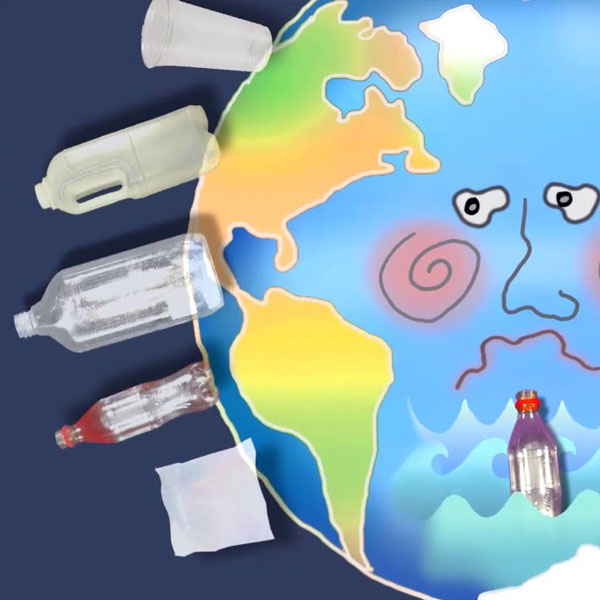
Plastic menace: Problem and its solution
Ironically, only two years ago, this award was given to a young lawyer from Mumbai – Afroz Shah – for the cleanliness work done by him and his team to transform the Versova beach, in other words, to remove largely plastic waste washed into the sea and accumulated near the coast. It is said that in 70 years since plastic has been around, humans have created 9 billion tons of it – most of which still exists. Question is whether the existing strategies for tackling plastic pollution – viz. reusing and recycling – are really making any difference? Is there a solution to the plastic menace? Or should use of all type of plastics be banned, forever? Apparently, we are in for harsher laws related to use of plastics. This was evident from a speech given by a Union Minister in his speech at a conference on Plastic Recycling and Waste Management organized by Indian Centre for the Plastic in the Environment (ICPE). The minister said that scaling of recycling is a laudable exercise but more needs to be done. In a clear warning, he said that the industry will have to come forward with some concrete steps or there will be a mass movement. Those in the know say that India consumes only 10% of per capita plastic in comparison to the USA. Use of plastic in developed countries like Japan and Sweden is several times more than it is in India. These countries have not gone about banning plastics from coming to the markets. What then is the right approach to use of plastic? Experts in petrochemicals like Avinash Verma of Indian Oil feel that the solution does not lie in removing use of plastic. Today, plastic is being used in far more industries than we can think of. Be it spaceships or aeroplanes, cars and trains, household items or office stationery, hospital equipments like X-Ray machines or even the daily use syringes – all have plastic component in them. Says he: “Plastic is a wonder material. This product offers much more solution in terms of needs of Indian society and its usage will continue to grow.” However, he agrees that the policy makers are alarmed, public is anguished and stricter rules are coming. Industry need to come forward and develop India specific solutions towards plastic recycling and implement it. Plastic recycling refers to the process of recovering waste or scrap plastic and reprocessing it into useful product. Due to the fact that plastic is non-biodegradable, it is essential that it is recycled as part of the global efforts to reducing plastic and other solid waste in the environment. Attempt by ICPE is to create a bridge between industry and consumers and make both of them more aware of their responsibilities. The key is the segregation at its source and publics have to be made aware of it, feels KG Ramanathan, President-ICPE. He asks why the problem has not reached such alarming proportions in countries where usage of plastics is many times more. Answer lies in awareness and the people’s willingness to contribute towards making society cleaner and healthier for future generations. Even in the case of UN award-winning Afroz Shah who is said to have cleared 4000 tons of garbage from the Versova beach in Mumbai in one year, and whose attempts drew attention of Bollywood personalities as well as Mumbai municipality – all coming forward in his support – the efforts would have born no fruit if there were no solutions for recycling this accumulated 4000 tons of waste. Eventually, creating public awareness and not strict laws towards banning plastic is the key. It is the public who has to get ready to segregate the waste suitably. If efforts of one person can bring such phenomenal results, what if the awareness drive reaches our villages and smaller cities! For an ultra-durable material like plastic, the goal of the system was to get public to use less by reusing what they had already made. Today, new innovative ways of re-circulating our plastic are being road-tested, literally in this case. Use of plastics in building rural roads has already begun in South India. Recycled plastic pellets are mixed into asphalt to make longer-lasting and cheaper roads. In the recent past, several waste-to-wealth mechanisms have been adopted to recycle and reuse plastic in innovative ways. One such trend has been the conversion of plastic waste to fuel and making it usable for both domestic and industrial purposes. India generates over 15000 tons of plastic everyday and the prospects of conversation to fuel are abundant provided there is sufficient infrastructure available. It is here that we have to focus rather than finding solutions that are not viable. Countries like Japan, Germany and the Unites States have already implemented the plastic to fuel conversion process with much success. These three have also been successful in creating business models out of the conversion process, resulting in the conversion model becoming a profitable business one. About 75 per cent of plastic waste in the US ends up in landfills, out of which only 10% is being recycled while the rest is combusted for energy. In this regard ICPE has already conducted an intensive study with ACC way back in 2008 on thermal treatment of plastics and found it is entirely safe. Ulhas Parlikar, ex deputy head – Geocycle India – of ACC gives another altogether different solution to the menace caused by plastic. He talks of co-processing solutions as vital for zero waste future. Says he: “Expired chocolates and lipsticks, stale food items and several other products which do not have any residual value are being utilized in cement plants extensively. We can use co-processing to utilize the resource value of such waste materials including plastics. It is here that the Government’s focus must lie, towards helping or even luring the cement manufacturers with small sops to go for co-processing.” Single-use carry bags of course need to be banned. And in this
Policy Incentivizing Sugar Exporters: What India can expect?
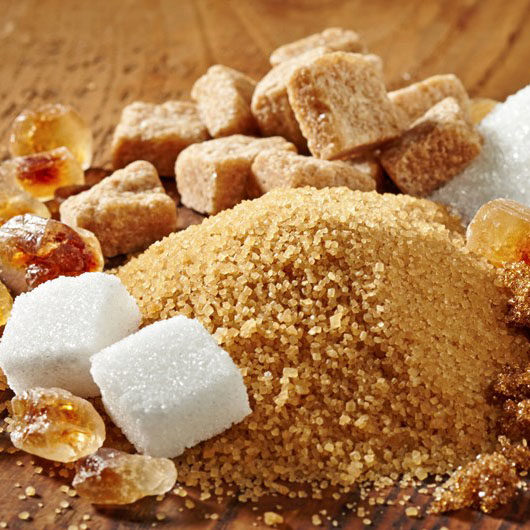
India’s cabinet recently approved incentives to boost cash-strapped mills to export sugar in the 2018-19 season as a part of farm support policy. This effort is germane to trim bulging domestic stockpiles which can be channelized to fetch dollars. According to this novel policy, cabinet will give transport subsidies of 1,000 rupees ($13.77) a tonne to 3,000 rupees a tonne to sugar mills, depending on their distance from ports. Also, the cabinet approbated the policy by uplifting the price that government directly pays to the cane growers to 138 rupees ($1.90) a tonne in the new season beginning October 2018. Both policy measures via subsidizing would cost the government approximately 55.38 billion rupees. The world’s principal sugar consumer is trying to abbreviate a growing stockpile, and the rise in shipments could add to pressure on global prices that are already trading near their lowest in a decade. This can be analysed from its two faces. First one is about breaching the targeted fiscal deficit because of financial support. On the other hand, the second face creates an optimistic wave for sugar exporter as currently sugar is traded at decadal lowest rate and rupee has also depreciated to its historical low. Now, current policy support is expected to overshadow the additional financial burden which will be discussed below. Sugar exports by country during 2017 totalled US$27.6 billion, down by an average -14.3% for all sugar shippers over the five-year period starting in 2013 when sugar shipments were valued at $32.2 billion. Year over year, the value of global sugar exports appreciated by 1.8% from 2016 to 2017, which indicates that India can definitely realize decent amount of capital by exporting aggressively. Among continents, Latin America (excluding Mexico) plus the Caribbean accounted for the highest dollar value worth of sugar exports during 2017 with shipments amounting to $14.3 billion or 51.8% of global sugar shipments. European countries were responsible for 19.5% followed by Asian suppliers at 18.1%. Smaller percentages came from Africa (7%), North America excluding Mexico (2.9%) and Oceania led by Australia (0.7%). Sugar is widely used all over the world to sweeten food and beverages, preserve jams and jellies, ferment yeast and enhance the colour and flavour of baked goods and ready to eat snacks. The most commercially produced sugar is white granulated sugar. Other types include brown, candy, liquid and cubed sugar. The global sugar market has grown at a CAGR of around 2% during 2009-2017 with consumption volumes reaching 176.8 million tons in 2017. Several factors like rising population, growth of the food and beverage industry, increasing incomes and expanding applications are expected to drive the growth of the global sugar market. It is expected that from 2018-2023, demand of sugar will surge by 4 to 4.5 CAGR, which means India should eye on escalating the sugar exports non-sporadically, especially to compete with Brazil. According to the Indian Sugar Mills Association (ISMA) estimates, India could start the new season with inventories of over 10 million tonnes of sugar and could produce another 35 million tonnes in the season. India will outdo Brazil as the world’s top sugar producer in coming couple of years, with the South American country trailing for the first time since the 1990s as its mills allocate more cane for ethanol production and as low investment depressed yields. On the other hand, excessive production has created a daunting situation for India as it fails to export the surplus because prices in the world market are lower than local prices, forcing the government to provide incentives. Since exports is the vital and pro-market way to ensure farmers get the promised price for cane, it is indispensable to be a regular exporter and not just only producer. Also, it is crucial for India to export commercial and value-added products rather than simply exporting raw form of sugar. As discussed above, growth rate of global demand is going to be doubled in next five years. The puny size of the domestic manufacturing sector and comparative disadvantage in technical know how makes India’s position hollow from value adding perspective. Despite allowing 100% FDI in food and processing sector, India attracted tad amount of capital in past couple of years. Its high time India should focus to export value added sugar products other wise these seasonal policies will make Indian sugar exporter dependable and handicapped.
New waterways to ease trade from North East Region
Indian government, in the last 4 years and under the leadership of our Prime Minister, has made its relations with East Asian neighbours a foreign policy. To expedite the PM’s Act East Policy, multi-modal connectivity has been approved in the north-eastern region, mostly involving Bangladesh, and work on this is being undertaken on a priority basis to increase bilateral trade and to increase people-to-people connectivity with our eastern neighbours. Myanmar had earlier commenced the process to open new waterways with Bangladesh and India followed suit with approving 16 waterway projects for the region, thus showing India’s commitment to prioritize multi-modal connectivity in the North East region (NER) and hence boost trade to and from the region. Prior to India’s partition, present NER was connected with the then undivided Bengal through Brahmaputra and Barak rivers. This was then the main conveyance system through which goods were transported to the Kolkata port. However, the once flourishing inland navigation system collapsed post partition and only four inland water routes currently remain operational between India and Bangladesh. These are Kolkata-Pandu (in southern Assam via Bangladesh, Kolkata-Karimganji (in southern Assam) via Bangladesh, Rajshahi (in Bangladesh)-Dhulian (in southern Assam) and Karimganj-Pandu-Karimganj via Bangladesh. There are also four ports of call in each country through which inter-country trade through inland waterways can take place. These are: Narayanganj, Khulna, Mongla and Sirajganj in Bangladesh and Kolkata, Haldia, Karimganj and Pandu in India. India’s NER looks like an extended arm of the mainland connected through the bottle neck corridor via Siliguri, West Bengal. With more than 4500 km of international border shared with countries like Bangladesh, Bhutan, China and Myanmar, NER is strategically and economically important as India’s gateway to the Far-East. This apart, NER enjoys bountiful natural resources and immense beauty which is of tourism interest. These factors enhance the importance of this region further. Importance of the initiative to develop new waterways can be understood from the fact that while the distance between Kolkata and Agartala is about 1650 km if one skirts Bangladesh, this distance falls to 515 km if transportation is through Bangladesh, thus reducing great amount of cost and time. Considering these factors, the government is working on a plan to set up a waterway freight corridor via Bangladesh at a cost of Rs. 5000 crore. This corridor will connect the Indian mainland with the North Eastern states. This proposed 900-km waterway would be used to transport freight from the northern and eastern states to North East and would start near Haldia in West Bengal, go to the Sunderbans, merge into the Padma River in Bangladesh and then join up with the Brahmaputra in Assam. A waterway is already being developed along the Ganga River between Haldia and Allahabad (1620 km). This link will also be utilized for trade between India and Bangladesh. All this is part of the PM’s Act East Policy, which is being aggressively pushed at all levels.
‘Make or Buy’ Dilemma: India’s Solar PV Market Outlook
India’s Ministry of Commerce, through the Directorate General of Trade Remedies (DGTR), has recently enforced a safeguard duty (SGD) on solar cells and modules imported from China and Malaysia for the next two years. DGTR, created as an umbrella authority for trade matters under the Ministry of Commerce, has recommended a 25% SGD for the first year, followed by 20% on such imports for the first six months of the second year and 15% for the remaining half of the second year. Safeguard duties are levied on the commodities by domestic governments/authorities to ensure that imports in excessive quantities do not cause injury to the domestic industry. Safeguard duties are temporary measures in defense of the domestic industry which is injured or has potential threat of injury due to sudden surge in imports. The investigation was undertaken after the complaint was filed by the Indian Solar Manufacturers Association (ISMA) on behalf of five Indian domestic manufacturers. In the complaint, the manufacturers alleged that despite the rapid expansion of the solar photovoltaic (PV) market in India, their margins have remained stagnant because the developers are importing equipment from cheaper manufacturing locations like China and Malaysia. The question arises that till what point of time India will be depended on China and Malaysia for importing solar cells? It sounds quite feasible to produce these products indigenously rather than depending on it left, right and centre. This will also bolster rupee in the long run. What then stops India from doing so? This article will be analyzing in brief India’s capacity to manufacture solar cells and solar panels domestically. It is important to understand the supply chain of solar PV module manufacturing, colloquially known as panel. It as follows: Silicon production from silicates (sand) Production of solar grade silicon ingots Solar Wafer Manufacturing PV Module Assembly The capital expenditure (CAPEX) and technical know-how required to set up the above processes decrease as one moves down the list. So, for example, silicon production is more capital intensive than simply module assembly. Most of the Indian names that one comes across are involved either only in module assembly or both wafer manufacturing followed by module assembly. None of the Indian names is involved in silicon production, although few are making strides towards it. There are three major reasons as to why China is ahead of India: Core competency Silicon module super league (six largest Chinese manufacturers) were already having core competencies in semiconductors, before they moved in manufacturing of solar cells in early 21st century. It takes time for companies to learn and put in action new technologies. So, when the solar industry in China began to take shape, Chinese companies had already the know-how. To give a perspective, the learning curve lasts from medium-term to long-term that is from five to ten years. In comparison, Indian companies had no learning curve in semiconductors when the solar industry in India began to thrive from 2011. Policy support Besides operational efficiency, another thing that is responsible for cost-effectiveness of Chinese modules is support from Government. The Chinese government is famous for its subsidizing programs concerning land acquisition, cheaper raw material, cheaper labor, export incentives, among others. In contrast, Indian policy support costs are higher than those of Chinese. Cost of Capital The cost of debt in India is highest in Asia-Pacific region. While cost of debt in China is about 5%, it is about 11% in India. Thus, debt is costlier in India, something that means higher interest expenses. Therefore, equity holders will have less cash flows and, thus, less equity IRR. This means that an investment in solar cell manufacturing facility in India will not be as attractive as in China. With the major solar PV installations driven by imports from China, the SGD will impact the solar tariffs in India. The upcoming bids for solar PV plants are expected to witness higher bid tariffs, which ultimately will impact the target of 100GW of solar PV installations by 2022. Comparing imports Vs domestic production of solar panels and solar cells Why Only China and Malaysia? Imports of solar products from other countries like Singapore and Taiwan will not attract SGD since they do not exceed 3% individually and 9% collectively of overall solar imports. The duty will not be imposed on the three solar cell and module manufacturers operating in the special economic zone (SEZ) area, namely, Adani Green Energy, Vikram Solar, and Websol Energy. Here, long term policy will be more efficient since India needs to expand its capacity base so that domestic demand could be met. The local industry cannot cope with the recent surge in demand so Chinese imports looks inevitable. But we cannot procrastinate this story for long. Given the likely 10 GW-plus annual demand for modules across India going forward, there is scope for a number of new plants to be built to localize the supply chain in line with Make in India campaign.